It is 2017 and this country is still banning books. It is 2017 and a book was just banned because it "made people uncomfortable". It is 2017 and in the United States of America "To Kill a Mockingbird" was just banned because people cannot handle the language contained in what is obviously a classic piece of literature. People in Mississippi, a place infamous for its racism and intolerance, just banned "To Kill a Mockingbird" because they cannot handle the "n-word".
To clarify, "To Kill a Mockingbird" (TKM) will no longer be TAUGHT in Mississippi schools, but will be allowed on library shelves. But the necessity for this book to be taught in schools, especially in high schools, is more and more evident every single day. When we live a time rampant with systematic racism, in a country whose leader took advantage of those preexisting prejudices and used them as a basis for his campaign, when African-Americans are being publicly mistreated by the law, when immigrants and DREAMers are being chased out of our country, we NEED this book.
In TKM we see time and time again, that no matter what, a person is a person. Nothing, and I mean nothing, changes this. Not skin color, class, age, situation in life, etc. This book is set in a time when the country was very clearly divided along racial lines, and in a southern state that widened this divide, in a time when anyone who wasn't white was treated as a second class citizen. Throughout the book we see Atticus, the father of the story's young narrator, Scout, treat everyone the same, from the destitute, to the addict, to the backwards thinking hillbilly's, to Tom, the African-American man whom Atticus must defend against rape accusations from a white woman.
It is through this narrative that we see that the law isn't always right, that some of us have a lot of privilege when it comes to how we are treated by the people who enforce those laws. It is through this narrative that we see that systematic racism is real, and it is wrong.
Teaching this book to people who have still developing brains is important, because we need those people to grow up and understand that everyone is equal. That as a country, we didn't handle things correctly for a long time, especially when it came to African-Americans. By teaching TKM, we show not only where we've come from as a country, but where we still need to go. By teaching TKM, we teach how to use white privilege as a tool to make the world a better place. By teaching TKM to high schoolers, you are teaching tolerance, compassion, understanding, empathy, and perspective. By teaching TKM to high schoolers, we are teaching an appreciation for diversity, a willingness to question society, and go against the norm.
The language (and violence) in this book is so incredibly important, because they illustrate where we were as a country in that time. The language frames a narrative that seems to be about coming of age in a turbulent time in American history, but is truly about the heroism contained within simply doing the right thing, even if the right thing goes against the status quo.
But most importantly, from this book, high schoolers will learn hope. Hope for a brighter tomorrow, for a better future for our country, hope for a better future for the people that live within its borders. And they will learn that they can make those hopes and dreams come true themselves, if they are willing to "climb in someone's skin and walk around in it".
There are messages in this book that cannot be taught in a better way. "To Kill a Mockingbird" stands the test of time because the reader connects with characters who touch on topics that America still struggles with today. How do we handle the mentally ill, those less fortunate than us, those of a different race? With grace, with compassion, and by treating everyone the same as you want to be treated.
Mississippi, you've made a mistake.
Alexis Olmstead is a 20something full time hot mess and part time diva living in Bellingham, Washington. When she's not defending the need for classic literature being taught in schools, she's taking photos, trying to find a job, and learning how to love herself. For more random updates, rants, reviews, and commentary on life with anxiety and depression, check back sporadically.
Showing posts with label literature. Show all posts
Sunday, October 15, 2017
Banned Birds
Posted by
♥ Alexis
at
10:47 PM
Labels:
banned books,
censorship,
education,
literature,
opinion,
responses
0
comments
Saturday, August 22, 2015
Alexis Reads: "Gone Girl" by Gillian Flynn
I finished "Gone Girl" by Gillian Flynn in a candlelit room, the sickly sweet smell of caramel candles filling the house, lying on my back with the flashlight of my phone, which was held between my chin and my sternum, aimed at the quickly dwindling pages of the book.
I've owned the paperback copy of this New York Times Bestseller for quite a few months now, but moving, starting a newish job, playing part-time actress, part time assistant cheer coach, and a recent addiction to Sid Meier's "Civilization: Beyond Earth" has left me little time to read. And that is a shame. Because as soon as the power went out and I settled down into the corner of my couch armed with "Gone Girl" and pure resolve to finish the book before the day was done, I immediately remembered why younger Alexis was such a bookworm. Books are AMAZING, people. Instantly I forgot that I am in a county being ravaged by fire and that I had no power, because I was in this tantalizing world of absolute insanity and there was no possible way I could leave until I had soaked up every last page.
Nick and Amy Dunne are far from the perfect couple, a fact that becomes more and more clear as the investigation into Amy's disappearance on their fifth wedding anniversary goes deeper and deeper.In what I decided to call "tag-team storytelling" the reader gains valuable insight into both sides of the disappearance through the point of view of both Nick and Amy, who is mostly represented by past-dated diary entries. Through this diary we see Nick and Amy's first meeting, their first kiss, Amy's constant wish for Nick to be something more, her fear for their marriage, her anger at having to leave her luxurious Manhattanite lifestyle to move to Missouri when Nick's mother falls ill. Through the course of these interchanging narratives we begin to question ourselves more and more. Has Amy simply disappeared, or did something more sinister happen? What exactly is Nick's involvement in everything? Just like every true crime show, book, or movie, the husband is the prime suspect, with a trail of evidence leading directly to him, including wickedly clever details that not even he remembers or thinks of when speaking to the police. OR DOES HE?
![]() |
| Basically me, the entire book. |
Gillian Flynn's writing is hypnotic at best, and thrill-inducing at worst. The whole book, which is
split into three parts that all end with the reader's mouth agape, eagerly turning the page to continue this story that has them reeling in disbelief, is clever, and perfectly thought out. As the story went on, I began to try to think two steps ahead of the narrator, searching for a flaw in all of these perfect plans, and I didn't find one. And where I imagine the one plot hole, there was later a careful explanation and a few precautions previously taken to cover the necessary tracks.
Seriously, "Gone Girl" is such a smart book. It is full of twists, turns, pure insanity, and minute details that come back to haunt the reader later, but never for a second does this book let its guard down or let the reader out of its vice-like grip. Honestly, I didn't eat for 11 hours yesterday, because I forgot to, and honestly was a little scared that this book would get mad at me and exact its revenge if I put it down, even for a moment.
I absolutely recommend this book, more than any book I've reviewed so far here on "I Am Unwritten", and I cannot wait to get my hands on Flynn's other two books, "Sharp Objects", and "Dark Places".
Before I go, I would like to take a minute to thank all of the hardworking men and women that are out there fighting fires here in Washington state. This week three firefighters lost their lives protecting ours, and that is a sacrifice we, as a community, can never truly repay. So thank you to all the firefighters, from all of us.
Alexis Olmstead is a bookworm, actress, assistant cheer coach, and the mother of three fur children, Scout the Cat, and Haida and Brego the Huskies. She enjoys long musicals, anything involving Idina Menzel, Meryl Streep, or Anne Hathaway, spending time with her family and friends, and a good glass of whiskey. For more rants, raves, and reviews, check back sporadically.
Monday, July 29, 2013
Everything You Know is Wrong: Romeo and Juliet Edition
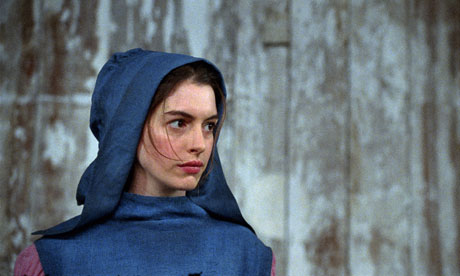
| Not that Anne Hathaway, idiot. |
Now even though the concept of everyone important ending up dead is a pretty easy one to grasp, people still seem to mess up when referencing the play in accordance to well - everything. But mostly their love life. What I really hate is when girls claim they are "looking for my Romeo" or say "he's the Romeo to my Juliet". Really? Really. Would you get married behind your parents back to a boy you have only known for 24 hours? Let's not forget the whole "let's profess our undying love for each other" scene happened the same night that they met at a party Romeo got ejected from, because like the little ass that he was, he showed up at a Capulet party with all of his Montague buddies. Anyways, after marrying this random guy off the street, would you participate in a fake suicide plan to be with him but then later commit suicide because of his idiocy? Would you kill yourself after three days because you love him so much? If not, you two are DEFINITELY not comparable to RomJule.
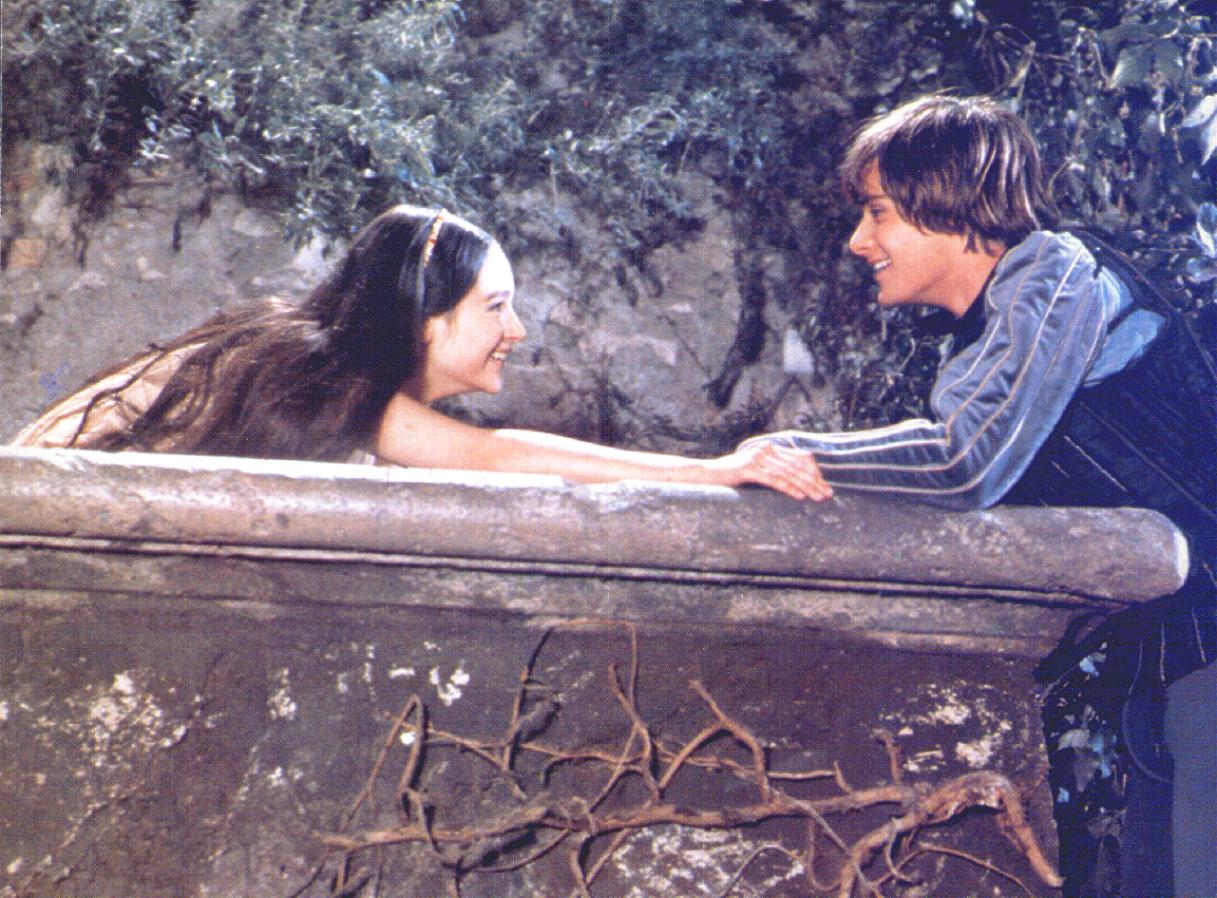
And since we're on the topic of the professing love scene - also known as the famous "balcony scene" let's talk about the fact that a disturbingly large amount of people think that the phrase "wherefore art thou
| Hello, my name is Zac E-I mean Romeo and I'm your stalker. |
WHAT?!? Did I just rock your world a little? Well hold on to your pants, kids, because I'm about to rock it some more. The majority of people like to think that Romeo is a hopeless romantic and harbors this unquenchable thirst for Juliet's love. To that I say no. Also, I say, read a book. In the beginning of the show Romeo is moping around because another Capulet, by the name of Rosaline, won't give him the time of day because hello, he's a Montague and also, she probably doesn't know he exists, considering Romeo has never actually seen Rosaline. In fact, he crashes the Capulet party to see Rosaline, but gets distracted by Juliet. Everyone wants a Romeo because they think he's this wonderfully romantic guy who will do anything for love, when in reality, he's incredibly needy, petulant, and not to mention an asshole.
But will anyone ever remember the asshole part? No. Why? Because of a.) ignorance and the lack of thorough examination when taught and b.) pop culture, such as TSwifty's song "Love Story" which has Romeo not only approaching Sir Capulet but asking for his daughter's hand in marriage (pretty ballsy for a 15 year old) and then asking Juliet to go pick out a white dress. Although, technically they have sex before they are married so maybe an off-white dress instead? Or she could wear a red one that they dye with the blood of the her cousin who Romeo killed in a pointless dispute. And then of course there is DiCaprio's portrayal of Romeo, which, while amazing, does very little justice to the original work and perpetuates the idea that Romeo is a hopeless romantic who loves Juliet and only Juliet when in reality he probably would have gotten over her in a few weeks once being with her proved too difficult, or someone prettier came along.
But of course that couldn't happen in Shakespeare's RomJule because RomJule is super cliche and the cliche doesn't take that direction, now does it? Now if you're shaking your head because you disagree with the fact that RomJule is cliche, then kudos. You're right. However, once upon a time in my AP English class, there was a boy who thought that not only was Shakespeare a piss poor writer, but also that RomJule was too cliche for his taste. Yes. An 18 year old high school senior criticized William Shakespeare. First of all child, Shakespeare was a fabulous writer whose work will live on for many more years to come. He had to have been a great writer because the staging of his shows were actually quite low in quality. Also, RomJule is not cliche, because RomJule basically created the whole "star-crossed lovers" trope. In fact the term "star-crossed lovers" comes from "Romeo and Juliet"!
And that theme of forbidden love is the reason that "Romeo and Juliet" continues to live on in ninth grade classrooms everywhere. Because ninth graders feel they can relate to that, and also, they are so used to it now, from reading series like Twilight that its good to know how that whole theme really got popular. If you've read Romeo and Juliet, kudos! If you understood it, have a gold freaking star and a license to quote it at will. But for the rest of you, for the love of all that is good and holy, please read "Romeo and Juliet" before you run around carelessly quoting it, because if I get another text message that asks "wherefore art thou?" I'm going to have an existential crisis.
Alexis Olmstead is an English Major and self proclaimed literature snob. For some reason unbeknownst to God or man her mother let her read RomJule in the third grade. She has read it six times since then, just to make sure she still understands it. Alexis lives with two cats, both of them hate listening to her ramble. That is why Alexis blogs. Everything You Know is Wrong is going to become a regular occurrence on "Alexis, Unwritten" so for more useless knowledge check back often.
Monday, March 11, 2013
Is Javert REALLY a Villain?
![]() |
| Illustration from the original publication of Les Mis |
In most books/movies/musicals and plays, there are good guys, and there are bad guys. However, Les Mis isn't that cut and dry. Yes, Javert is ruthless, tries to take down the barricade from within, and will NOT leave Valjean alone, but why does he do all these things? Because that's his job. Through the whole of Les Mis Javert is carefully guided by his moral compass, and only does what he thinks is right because he came from the gutters, he knows the types of people who live there, he knows they don't always live up to the letter of the law, and he doesn't want to end up back there. Can you really blame him for that?
I will allow that he is Valjean's antithesis but only because Valjean breaks parole and thus the law. And breaking parole is grounds for immediate imprisonment. That's not archaic either. In fact, you STILL go to jail for breaking parole, and the police WILL come and find you. Just live Javert went to find Valjean. So yes, Javert is Valjeans enemy, but not a villain, because as even dear old Jean states, Inspector Javert is only doing his duty in hunting the ex-convict down.
I believe that's why Valjean is so merciful and lets Javert escape from the students virtually unharmed. Really he has done no wrong, and only upheld the law. Of course Valjean's actions cause Javert's suicide, but he doesn't jump off that bridge because he can't beat Valjean, he jumps off that bridge because for once his moral compass might not be completely correct and if that's true then he is indebted a thief and Javert cannot handle that.
After Valjean saves Javert a moral dilemma introduces itself to Javert. This man, who's original transgression was stealing bread for his sisters family and has been too busy saving other people's lives to be arrested, has also saved Javert. Javert would have died at the hands of the students and could have just as easily died by Valjean, in fact, Javert believes he was supposed to be killed by Valjean. But he was spared. He owes this man something, and the only way Javert knows to pay his debt is to let Valjean walk free, but then he is going against everything he has believed and breaking the law at the same time. And what if Valjean goes to jail? Then Javert has to live, knowing that he owed this thief his life and sent him back to a life of slavery. There is no way out.
So he kills himself. In my eyes Javert has the hardest struggle. He continually fights his morality, from the moment he first meets Valjean as the mayor and suspects him of being 24601 to the moment he takes his life. If anything, Javert is a tragedy, not a villain. He tried to do right and ended up having to let the criminal he'd been chasing for 15 years escape.
I'm sorry you got such a crap ending, Javert. You just tried to do good.
I will not forget your name.
Monday, February 11, 2013
The Diary of a Young Girl
Every bibliophile has that one book that will love unconditionally, that they will read until it is falling apart, worn cover slowly drifting away from the other worn cover, the spine no longer firm, random pages falling out, and yet, there is still a beauty to the book because to them it is not just any book, it is the book.
The one book that helped them cope with a part of their life they never want to live through again. The one book that introduced them to a person (real or not) who they identified with so completely that the reader wanted them to cover for a nice cup of tea and a chat.
For me, that book was "The Diary of Anne Frank". Growing up in my house was really tough. Parts of my childhood were spent experiencing things no child should have to live through and when I entered the sixth grade and read Anne's diary for the first time I knew what it was like to be understood, and for the first time I felt completely inspired.
Obviously I was never a young Jewish girl in Nazi Germany hiding out in order to preserve my life, but I was a young girl hiding out in the nooks and crannies of my abusive mothers house in order to preserve my safety. Reading Diary of Anne Frank I felt that if she could still find hope in everyday life even when every day had the chance of being her last day spent in (partial) freedom, then I could find hope in everyday life even with knowing that I was scared of my mother, I wasn't sure if I would get dinner, and I knew going to school the next day might not happen.
I felt like Anne and I were meant to be kindred spirits of sorts, she was so rash and had a hard time controlling her mouth just like I did/do and we were the same age even. She would know what it was like to try not to make any noise at all and to wonder if life would be any more than just hiding out in cramped quarters and trying to make the best of it.
And so, as the years went on, I read Anne Frank over and over again. If I could't find something to read that was my default. I honestly think that it was the book that helped me survive that part of my life. Anne Frank died, but she left a legacy. Her diary not only helped me, but it has also helped hundred of people around the world, because we know what it is like. We understand her, and she understands us.
To me, Anne Frank is a superhero, and her Diary will be the book that I will never stop loving. It will be the book that gets me through lonely nights and boring days at work, and it is the reason that I have the never say die attitude that I have worked hard to develop all these words.
Thanks, Anne.
The one book that helped them cope with a part of their life they never want to live through again. The one book that introduced them to a person (real or not) who they identified with so completely that the reader wanted them to cover for a nice cup of tea and a chat.
For me, that book was "The Diary of Anne Frank". Growing up in my house was really tough. Parts of my childhood were spent experiencing things no child should have to live through and when I entered the sixth grade and read Anne's diary for the first time I knew what it was like to be understood, and for the first time I felt completely inspired.
Obviously I was never a young Jewish girl in Nazi Germany hiding out in order to preserve my life, but I was a young girl hiding out in the nooks and crannies of my abusive mothers house in order to preserve my safety. Reading Diary of Anne Frank I felt that if she could still find hope in everyday life even when every day had the chance of being her last day spent in (partial) freedom, then I could find hope in everyday life even with knowing that I was scared of my mother, I wasn't sure if I would get dinner, and I knew going to school the next day might not happen.
I felt like Anne and I were meant to be kindred spirits of sorts, she was so rash and had a hard time controlling her mouth just like I did/do and we were the same age even. She would know what it was like to try not to make any noise at all and to wonder if life would be any more than just hiding out in cramped quarters and trying to make the best of it.
And so, as the years went on, I read Anne Frank over and over again. If I could't find something to read that was my default. I honestly think that it was the book that helped me survive that part of my life. Anne Frank died, but she left a legacy. Her diary not only helped me, but it has also helped hundred of people around the world, because we know what it is like. We understand her, and she understands us.
To me, Anne Frank is a superhero, and her Diary will be the book that I will never stop loving. It will be the book that gets me through lonely nights and boring days at work, and it is the reason that I have the never say die attitude that I have worked hard to develop all these words.
Thanks, Anne.
Thursday, November 8, 2012
A Criticism of Modern Day Colloquies and Literature
While at an international student event with my roommate and friends on Wednesday I encountered not one, but two really great conversations that led to this post. One was about literature, one was about conversation, and both of them were based off of the point that in today's world, words are quickly losing meaning. I could talk about this in one of two ways, eloquently and maturely, like the title suggests I might, or with children's stories that I make up on the spot. Seeing as I think everything can be explained with a good children's story, I think I shall choose the latter of the two.
Conversation: Back in the time before internet, computers, or modern phones, people really knew how to talk to each other. You may think that people talk now more than ever because there are things like texting and Facebook to keep the world connected, but really, that's not talking. That's people exchanging shortened versions of words back and forth that rarely mean anything. But back in your grandparent's time, a group of people could sit in a room together and have a conversation based on something besides what they saw on the internet. A conversation that meant something. And since there was no texting or emails or Facebook chat they wrote letters, and everything they said meant something because letters took so long to get from one place to another. Words were used and not wasted. But then along came internet and cellphones and basically modern technology and phrases such as "k" and "lol" were accepted as parts of conversation. When talking with people it was very easy to bring up Facebook in normal conversation, and social networking sites were impossible to stay away from in day to day exchanges. This would not necessarily be a bad thing, if a devolution of vocabulary hadn't simultaneously occurred. To show you what I mean, I present: a sample conversation.
How R U?
Gr8. U?
Ok.
Where u @?
skool.
k c u in a sec. :)
You may not believe me, but people really talk like that now. What happened to great conversations where all included parties departed with new wisdom? I'm not saying that these conversations still don't happen, but they aren't as prevalent, and in my experience most conversation today is a contest who can talk the most and say the least at the same time. Let's change that, world. Let's bring back communication that doesn't exclusively happen through technology. Technology is a barrier to communication and the only way to break it down is through face to face interaction having a conversation about the news, the weather (it's snowing), sports, intellectual pursuits, life, and good literature.
Speaking of good literature, let's talk about how bad writing has gotten recently. Since when is it okay for a poorly written BDSM Twilight fan fiction to end up topping the New York Best Seller list? In fact, it topped best seller lists around the world! Let me revise that. Since when is it okay that the entire erotic series be on the top of the NY Best Seller List? That spot used to be saved for books that actually meant something and were well written to boot. Think Ernest Hemingway, Neil Gaiman, Stephen King, John Grisham, Kurt Vonnegut, J.K. Rowling, Tolkien, and that's only a sampling. What's more, how did Twilight end up on the best seller list? Okay, I know how, it sold a lot of books. But why? It's poorly written, with a sketchy, predictable plot, and a million other things that are just awful. People are accepting rot for literature, and it needs to stop. I am all for modern literature, don't get me wrong. Looking for Alaska is one of my favorite books, and I would think that it's pretty modern. The Harry Potter Series grew along with an entire generation of people world wide, and there are so many more examples of great novels that have been written with the "modern literature" category that was born between the late 19th and early 20th centuries.
However, the "they don't make 'em like they used to sentiment" greatly applies here. Where literature is concerned, books should be written for quantitative purposes, not qualitative. It's wonderous if a particular author has published at least 154 sonnets, but if none of those sonnets are very good, why even publish them*? A good book should teach the reader something. Books have the power to inspire and teach, to leave the reader with a new perspective on life, and potentially to change a life. with the books being published recently, that's not going to happen.
Why do I say this? Well, here's my reasoning. Recently I watched a video about writing and how every new writer goes through a period of "sucking" or just generally being a bloody terrible author. As aspiring (or new) authors everyone needs to embrace that period of time and realize that even though you have a potentially great story doesn't mean you should just throw it out into the world poorly written and underdeveloped. Authors need to give themselves time to suck, and embrace the suckiness of their writing along with it. Practice, spend years developing books, ideas, plots, characters, doing research and then, THEN great modern literature will potentially be born.
These observations have been made through my literature snob lenses, but I can't help but thinking that there is some validity to them. As a community we can only hope to move forward with literature and conversation, lest the world ends up like a scene from Idiocracy.
Why do I say this? Well, here's my reasoning. Recently I watched a video about writing and how every new writer goes through a period of "sucking" or just generally being a bloody terrible author. As aspiring (or new) authors everyone needs to embrace that period of time and realize that even though you have a potentially great story doesn't mean you should just throw it out into the world poorly written and underdeveloped. Authors need to give themselves time to suck, and embrace the suckiness of their writing along with it. Practice, spend years developing books, ideas, plots, characters, doing research and then, THEN great modern literature will potentially be born.
These observations have been made through my literature snob lenses, but I can't help but thinking that there is some validity to them. As a community we can only hope to move forward with literature and conversation, lest the world ends up like a scene from Idiocracy.
*If you realized I was referencing Shakespeare, find me. We're best friends now. Also, in case you were wondering, all 154 of those sonnets were golden.
Monday, September 10, 2012
Classic Lit but Mostly Shakespeare
The first time I picked up a Shakespearean work I was in the third grade and I was at the public library with my mother. I was roaming the aisles looking for something with more meat than Ramona Quimby, not only because I had read all of the ones that were out, but also because my teacher told me that I had a high school reading level and so I had an inflated ego.
I remember pulling Romeo and Juliet off the shelf, and
Twelfth Night making this really loud, quite obnoxious thud as it came down
with it and fell on the ground. I remember the way it smelled, because to me,
books, especially older ones, have this very distinct scent that me and many
other bibliophiles have come to fall in love with. I remember opening it up and
reading the iconic line “Romeo, Romeo wherefore art thou Romeo?” and then
underneath “*Why are you called Romeo”. That moment was huge for me.
In that moment not only did I realize that I could read this
book and have bragging rights that not many third graders had (I remember my
teacher, Mrs. Pruitt laughing when I showed her what I had got) but I realized
that in the crazy world of literature, words meant something different than
what the reader initially thought. I realized that there was a whole world of
books written by really, really old people that said things that meant
something entirely different! And with that epiphany I decided to check it out.
I put twelfth night back, and have yet to read it.
But ever since that day in third grade I have spent my days
happily devouring whatever classic novels (and sometimes not so classic novels)
that I can get my hands on, always choosing Shakespeare over anything
else.
That one moment in the library shaped a large part of who I
am today. And my mom allowing me to check it out (even though the librarian
advised against it) opened the gates that led me down the path of English
teacher-ism.
Wherefore art thou English Teacher?
Subscribe to:
Posts (Atom)